
Blog Incentive Program Design Incentive Trends Incentives
The Rise of Data Driven Incentive Programs
 One10
|
March 31, 2026
One10
|
March 31, 2026

Incentive programs are entering a new era—one defined by data, insight and intentional design. That shift was the focus of a recent episode of the Motivation Insiders podcast, Data‑Driven Incentive Insights, where industry leaders explored how analytics and behavioral science are transforming the way organizations motivate performance.
Among the panelists was Richelle Suver, who joined the conversation to share perspectives on how data‑driven strategies are helping companies move beyond traditional, assumption‑based incentive models. The discussion highlighted a growing realization across the industry: the most effective incentive programs aren’t built on guesswork—they’re built on evidence that shapes behavior and drives measurable outcomes.
What follows are the key themes and insights from the episode, and why they matter for organizations looking to design smarter, more impactful incentive programs.
———————————————————————————
For years, incentive programs have relied on a familiar formula: set goals, offer rewards, and hope performance improves.
But today’s most effective organizations are taking a different approach.
They are using data, analytics and behavioral insights to design programs that actively shape performance—not just reward it.
The takeaway is clear:
Incentive programs are most powerful when they are built on evidence, not assumptions.
Why Data Matters in Incentive Programs
Historically, many programs were designed around broad assumptions about motivation.
For example:
- “Top performers will chase the biggest reward.”
- “Travel incentives motivate everyone equally.”
- “Participation means the program is working.”
But without data, these assumptions are difficult to test.
Analytics allows organizations to move beyond guesswork by answering questions like:
- Which behaviors lead to successful deals?
- Which participants are most engaged?
- Where are performance gaps emerging?
- Which incentives create the strongest response?
This insight enables companies to design programs that target the behaviors that actually drive results.
From Static Programs to Dynamic Incentives
One of the most important shifts discussed in the podcast is the move from static programs to dynamic ones.
Traditional programs often followed a fixed structure:
- Launch the incentive
- Track results
- Reward winners at the end
Data-driven programs work differently.
They allow organizations to:
- Monitor performance in real time
- Adjust communications and incentives during the program
- Identify disengaged participants early
- Reinforce the behaviors that lead to success
This approach turns incentive programs into living systems that evolve throughout the campaign.
Personalization Is Becoming Essential
Another major theme is personalization.
Different people are motivated by different factors:
- Recognition
- Achievement
- Competition
- Experiences
- Financial rewards
Data helps organizations understand what resonates with different audiences and tailor programs accordingly.
Rather than applying a single reward structure to everyone, companies can design programs that are more relevant and engaging for each participant group.
AI and the Future of Incentives
Artificial intelligence is beginning to amplify the power of incentive analytics.
AI can help organizations:
- Detect engagement patterns
- Predict which participants are likely to disengage
- Recommend optimal incentive structures
- Identify opportunities to reinforce behaviors
These capabilities allow companies to make smarter decisions about how they motivate people.
The Bigger Opportunity: Designing for Behavior
The biggest shift discussed in the podcast isn’t technological—it’s strategic.
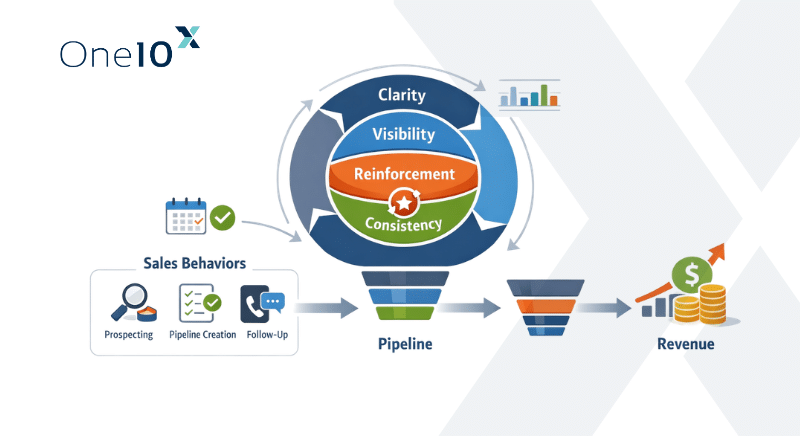
Data allows organizations to move from rewarding outcomes to designing incentives that shape behavior.
That distinction is critical.
Outcomes like revenue or deals closed are lagging indicators.
The behaviors that lead to those outcomes—pipeline development, product training, partner engagement—are leading indicators.
By identifying and reinforcing those behaviors, companies can create programs that deliver more consistent performance.
Final Thought
Incentive programs are evolving rapidly.
Organizations that continue to rely on traditional program design risk missing the opportunity to use data to improve performance.
The companies seeing the greatest results are those that treat incentives not simply as rewards—but as data-informed systems for driving behavior and engagement.
Want to learn how data can improve the impact of your incentive programs? Check out the full podcast or reach out to One10 for additional information.